

Breakthrough in understanding presence of Lynch syndrome across cancer types in India
Using a common biomarker across 11 different tumour types to detect a common hereditary cancer predisposition syndrome, data from India's largest study shows.
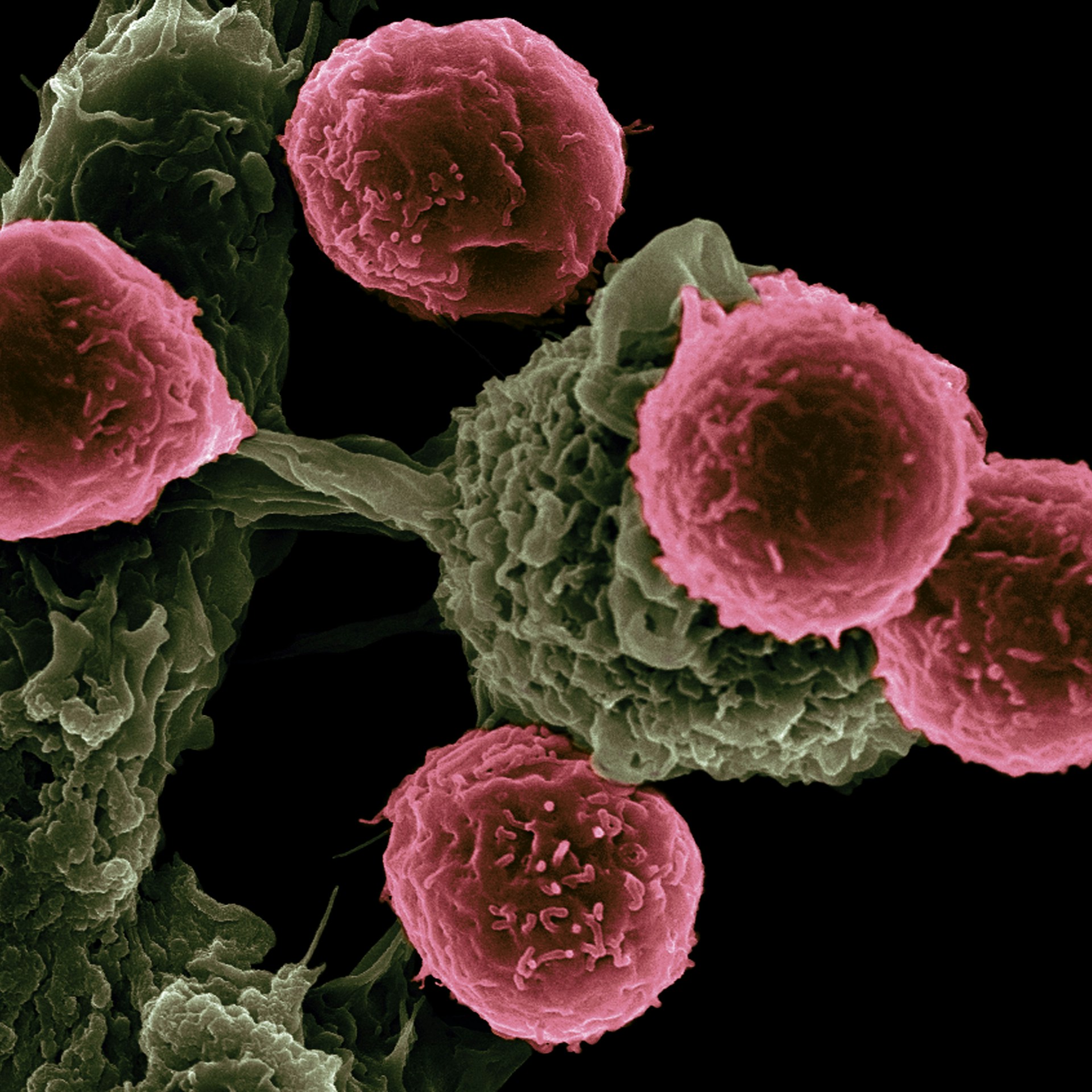
The study published in Familial Cancer provides India’s first molecular epidemiological evidence of the relationship between outcome of the breakdown in DNA spellchecking mechanism (called microsatellite instability, MSI for short) and Lynch syndrome across multiple cancer types.
The 7 year study involved over 500 patients with any one of 11 cancer types, and revealed that MSI is present in 25% of all tumours, and Lynch syndrome was detected in ~50% of all MSI tumours, extending beyond the usual suspect- colorectal cancer.
The study, led by Dr. Harsh Sheth from FRIGE-Institute of Human Genetics, is an observational study which carried out MSI testing across all tumours. All patients triaged with MSI-positive tumours underwent testing of their DNA from blood to detect Lynch syndrome. Family members of the participants diagnosed with Lynch syndrome were invited for targeted genetic testing and counselling.
But this is not just a research story. It is also a clinical translation story: MSI is not just a biomarker for immunotherapy treatment select, it acts as a gateway for Lynch syndrome diagnosis across multiple tumour types. This aids in improving clinical surveillance, cancer prevention, and familial risk assessment.
What is Lynch syndrome and does it matter?
Lynch syndrome is a hereditary cancer predisposition syndrome which is estimated to affect one in 300 poeple in the general population.
These people have a genetic problem with DNA repair, making them at a significant high lifetime risk of cancer such as bowel, womb, ovary, stomach, liver, pancreas, oesophagous, and more during their lifetime.
When a cell divides, the genetic information inside them is copied too. Sometimes, errors are made during the copying process. If an error occurs within a cancer-causing gene and is not corrected, cells can start to divide quickly and lead to cancer. The mismatch repair (MMR) genes help to prevent this. People usually have two copies of each gene. If the “spell checker” mechanism stopped working because of damage to both copies of the MMR genes in the cell, that means that the genetic problem is inside the cancer itself. However, if people inherit one faulty copy of an MMR gene, this means that every cell in their body has only one working copy of the gene. They only need one more error in the working copy for their “spell checker” mechanism to stop working properly. That person is called “predisposed” to cancer and the disease is known as Lynch syndrome.
Incomplete understanding of Lynch syndrome
Most clinical and research pathways to date focussed predominantly on Lynch syndrome detection in bowel cancer using family history and age at cancer diagnosis as markers. Despite Lynch syndrome leading to increased risk of cancers throughout the gastrointestinal tract, data for it in the Indian cancer patients remained sparse.
This increased risk of missing out on detecting Lynch syndrome patients and their family members.
This is where our research changes the landscape.
What did we do at FRIGE-IHG?
We enrolled 519 patients with cancer along the GI tract into a structured, stepwise genetic workup.
1. Tumour phenotype for all: Each tumour was tested for microsatellite instability (a key tumour biomarker for Lynch syndrome)
2. Testing for hereditary cancer: Using whole exome sequencing in patients with microsatellite unstable tumours to identify mutations in the MMR gene which would confirm Lynch syndrome diagnosis
3. Family risk assessment: Targeted testing of relatives of patients with Lynch syndrome, to identify relatives with increased cancer risk.
This comprehensive pathway covered tumour phenotype, to germline testing, to familial risk assessment.
What did we find?
MSI is useful for tumour triage across multiple different tumours
- Microsatellite instability detected in 25% of all tumours
- Enriched in bowel, endometrial, and gastric tumours
High Lynch syndrome yield in MSI tumours
- 50% of all MSI tumours were detected with Lynch syndrome
Lynch syndrome diagnosis extends beyond bowel cancer
- Lynch syndrome detected in patients with bowel, endometrial, ovarian, prostate, and stomach cancer
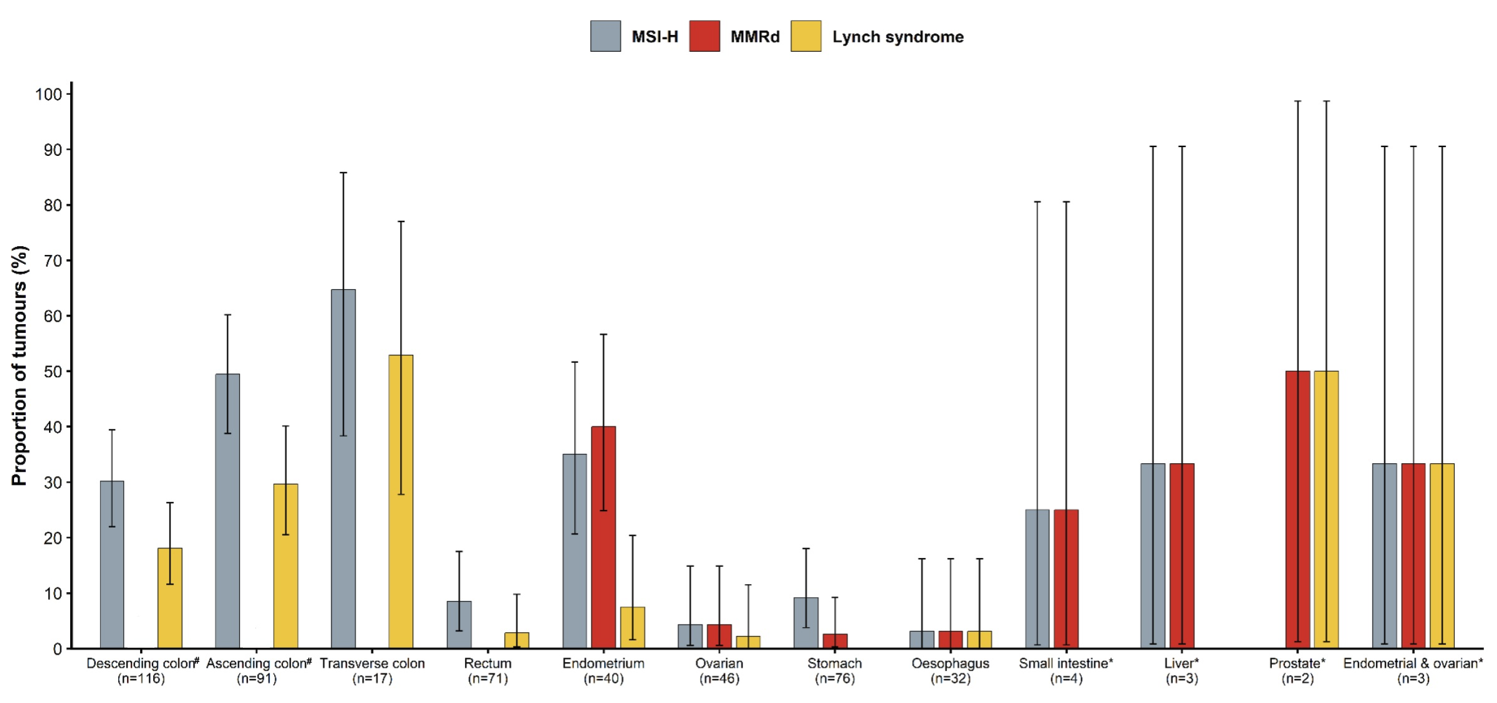
Figure 1: Distribution of MSI and Lynch syndrome across cancer types.
MLH1 gene predominant in India
- 70% of Lynch syndrome cases were due to mutation in the MLH1 gene
- 2 mutations (c.306G>T and c.156delA) in the MLH1 gene accounted for 33% of all Lynch syndrome cases
2 Founder variants discovered
- MLH1 c.306G>T enriched in North India and emerged 800 years ago
- MLH1 c.156delA enriched in Siddhpur area of Gujarat and emerged 1750 years ago
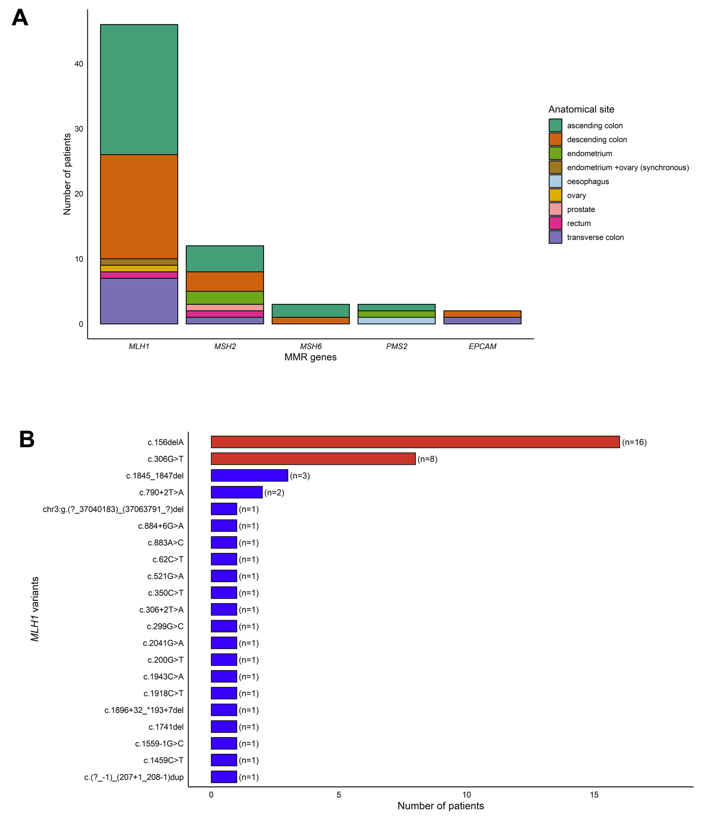
Figure 2: Founder variants in MLH1 gene
Why is this work a game-changer?
With this work, we show that Lynch syndrome is not restricted to bowel cancer alone, it is enriched in other cancer types too.
Using microsatellite instability as a biomarker together with population aware genetic architecture, there is an opportunity to provide better cancer surveillance, cancer prevention, and family planning.
Precision cancer risk guidance
When people hear “familial cancer”, they often assume they will surely get cancer throughout their lifetime.
With advanced knowledge, precise cancer risk cancer can be calculated and correspondingly, surveillance mechanisms can be given.
Cancer risk reduction
Our prior work has shown how aspirin and resistant starch helps in reducing cancer risk in people with Lynch syndrome.
Actively preventing cancers through an ‘over the counter’ and ‘low cost’ drug can help reduce cancer related morbidity and death, cost to the patients and burden on the fragile healthcare system.
From dietary perspective, resistant starch is found naturally in peas, beans, oats and other starchy foods. The dose used in the trial was equivalent to eating a banana daily before it becomes too ripe and soft.
Should I consider genetic testing for Lynch syndrome?
Lynch syndrome testing is not necessary for every cancer patient. But it is especially worth considering if you have:
- Bowel cancer, gastrointestinal, or genitourinary cancer diagnosis under the age of 50 years
- If your tumour shows microsatellite instability phenotype
- If you have a strong family history of cancer
Our genetics team can help decide the best approach for Lynch syndrome diagnosis, cancer risk estimation, surveillance and cancer prevention strategies.
If you would like to know whether sequencing is suitable in your situation, you can contact us to discuss testing pathways and genetic counselling.